
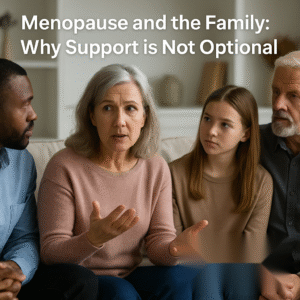
A Shared Life Stage
Menopause is often misunderstood as a single moment in a woman’s life. In reality, it is a continuum, beginning with perimenopause, the years of hormonal transition that can start as early as the mid-30s; culminating in the clinical definition of menopause (12 consecutive months without a period); and extending into postmenopause, which lasts for the rest of a woman’s life. This journey affects not only the woman but the entire household. Sleep disturbances, mood shifts, and physical changes can ripple into family dynamics, work, and financial stability.
When families recognize menopause as a shared journey, they can strengthen bonds and protect long-term health. When they don’t, the silence can harm relationships, wellbeing, and even economic security.
The High Cost of No Support
The absence of support in menopause is more than a matter of comfort, it is linked to measurable health risks.
· A 2021 Journal of Women’s Health study found that women with little social or family support during menopause reported double the rates of moderate-to-severe depressive symptoms compared to those with strong support networks.
· Divorce and relationship strain peak in midlife; a notable UK survey by Gransnet and The Telegraph (2018) found 1 in 4 divorces among respondents were linked to menopause-related issues, often due to a lack of understanding from partners.
· In workplaces, a UK Parliament inquiry (2022) reported that 1 in 10 women left their jobs due to unmanaged menopause symptoms, which directly impacts household income and family financial security.
Without family understanding, women may withdraw socially, minimize or hide symptoms, or avoid medical consultation, all of which worsen long-term health outcomes.
The Multi-Layered Impact of Silence
· Emotional Cost: The World Health Organization recognizes that stigma and silence around menopause contribute to increased isolation and higher rates of anxiety and depression. When family members misinterpret symptoms like fatigue or irritability as laziness or disinterest, women may internalize guilt and shame.
· Relationship Cost: Research published in Maturitas (2019) shows that intimate partner relationships are particularly vulnerable. Changes in libido, vaginal dryness, or mood can create distance when not openly discussed, leading to avoidable breakdowns in intimacy.
· Economic Cost: Women aged 45–55 represent one of the fastest-growing segments of the workforce (OECD, 2020). When symptoms are unmanaged, families lose income, and women’s pensions and retirement savings are compromised. The ripple effects can last for decades.
Why Family Support is a Health Intervention
Evidence consistently shows that supportive families are a powerful determinant of positive health outcomes:
· Emotional validation lowers cortisol (the body’s main stress hormone), which improves sleep, stabilizes mood, and supports cardiovascular health.
· According to NAMS (North American Menopause Society), women who receive emotional and practical support at home are more likely to adopt lifestyle strategies (exercise, nutrition, stress management) that reduce risks of osteoporosis, heart disease, and metabolic syndrome.
· Family support also has protective effects against cognitive decline. A 2018 Alzheimer’s & Dementia review highlighted that women with strong social and family networks have slower cognitive aging than those experiencing chronic stress and isolation.
A Framework for Family Support: What to Do
1. Educate Yourselves Together Encourage family learning. Even brief discussions normalize menopause. Studies show that adolescents exposed to accurate reproductive health information, including menopause, demonstrate higher empathy toward parents and reduced stigma.
2. Redistribute the Care Load Symptoms such as insomnia and joint pain can reduce daily capacity. Families can step in with practical help, taking on household chores, managing childcare, or simply sharing responsibility. In households where this occurs, women report lower perceived stress scores (Mayo Clinic Proceedings, 2020).
3. Validate, Don’t Minimize Research in Qualitative Health Research (2022) shows that women who felt their families “believed them” reported higher self-esteem and better management of symptoms. Conversely, dismissal of symptoms was associated with feelings of betrayal and anger.
4. Protect Health as a Team; Families can encourage routines that support bone and heart health, both of which are critical after estrogen decline. Regular walks, balanced meals, and shared stress-management practices reduce long-term risks not only for the woman but for the entire household.
Conclusion: Standing Together
Menopause is not a solitary event. It is a decades-long stage that touches every member of a household. The absence of family support can lead to depression, fractured relationships, and financial instability. In contrast, families who validate, educate, and care together create stronger bonds, healthier outcomes, and generational change.
How families respond to menopause today shapes the future. Daughters learn whether this stage is one of respect or invisibility. Sons learn whether women’s health deserves empathy or dismissal. Families that normalize menopause through open conversations build resilience and empathy across generations.
At Menopause Matter, we remind families: supporting a woman through menopause is not just an act of kindness. It is a necessary act of solidarity that strengthens the entire family system.