
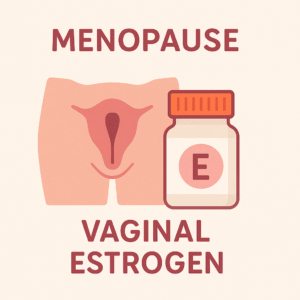
Understanding Vaginal Estrogen
Menopause brings with it many well-known symptoms—hot flashes, night sweats, mood changes—but one of the most under-discussed, yet deeply impactful, changes is genitourinary syndrome of menopause (GSM). This medical term describes the thinning, dryness, and loss of elasticity in the vaginal and urinary tissues that occur as estrogen levels decline.
Vaginal estrogen therapy is a highly effective, low-dose, localized hormone treatment designed to restore health to these tissues. Unlike systemic hormone therapy, which circulates estrogen throughout the body, vaginal estrogen delivers a small, targeted dose directly to the vaginal area—with minimal absorption into the bloodstream.
Why Vaginal Estrogen Is Important
Declining estrogen affects much more than comfort during intimacy. Left untreated, GSM can worsen over time and lead to persistent discomfort, urinary issues, and even changes in daily functioning. Vaginal estrogen helps by:
- Restoring Moisture and Elasticity
It rehydrates the vaginal lining, making it softer, more flexible, and less prone to microtears. - Rebuilding Healthy Tissue
Estrogen promotes the growth of healthy epithelial cells, thickening the vaginal wall and improving resilience. - Improving Blood Flow
Increased circulation supports tissue repair and healthy pH balance. - Supporting Urinary Health
Many women find relief from urinary urgency, frequency, burning, and recurrent urinary tract infections (UTIs) once estrogen is restored locally. - Protecting Against Long-Term Changes
GSM doesn’t “go away” on its own. In fact, without intervention, tissues often continue to thin with age. Vaginal estrogen offers ongoing protection and quality-of-life benefits.
Different Forms of Vaginal Estrogen
Vaginal estrogen therapy comes in several forms. The choice depends on personal preference, cost, availability, and medical advice. All are prescription treatments in Canada and most other countries.
1. Vaginal Estrogen Cream
- Examples: Estrace® (estradiol), Premarin® (conjugated estrogens)
- How it’s used: Applied inside the vagina with an applicator, usually daily for 2–3 weeks, then 2–3 times weekly for maintenance.
- Advantages: Flexible dosing; can also be applied to the outer vulvar area for relief from external dryness and itching.
- Considerations: Can be a little messier than other options; some women prefer to use at bedtime.
2. Vaginal Estrogen Tablet (Pessary)
- Examples: Vagifem® (estradiol)
- How it’s used: A small tablet inserted into the vagina with a single-use applicator, daily for two weeks, then twice weekly for maintenance.
- Advantages: Clean and discreet; no mess.
- Considerations: Does not address vulvar dryness directly—some women may combine it with an external estrogen cream.
3. Vaginal Estrogen Ring
- Examples: Estring® (estradiol)
- How it’s used: A soft, flexible ring inserted into the vagina and left in place for three months, releasing a steady low dose of estrogen.
- Advantages: Extremely low-maintenance; no need to remember weekly doses.
- Considerations: May not be suitable for women with certain pelvic floor conditions; requires comfort with insertion and removal.
Is Vaginal Estrogen Safe?
For most healthy women, vaginal estrogen is considered very safe, even for those who cannot take systemic hormone therapy. Because the dose is so low and absorption into the bloodstream is minimal, it generally does not raise overall estrogen levels significantly.
Clinical guidelines from the North American Menopause Society (NAMS) and the Society of Obstetricians and Gynaecologists of Canada (SOGC) support its use for long-term symptom relief in GSM. Many women continue treatment indefinitely, as symptoms return when therapy is stopped.
However, vaginal estrogen may not be suitable for everyone. Women with a history of certain estrogen-sensitive cancers should discuss risks and benefits with their healthcare provider, ideally in consultation with their oncologist.
When to Consider Vaginal Estrogen
You may benefit from talking to your healthcare provider about vaginal estrogen if you experience:
- Persistent vaginal dryness or itching
- Pain during sexual activity
- Recurrent urinary tract infections
- Burning or stinging when urinating
- Urinary urgency or leakage
The Bottom Line
Vaginal estrogen is one of the most effective and underutilized treatments for post-menopausal comfort and health. It is localized, low-risk, and life-changing for many women. Whether you choose a cream, tablet, or ring, the key is consistency—using it regularly as prescribed for lasting results.
By breaking the silence around GSM and making vaginal health a priority, more women can enjoy not just better intimacy, but better urinary health, comfort, and confidence in midlife and beyond.