
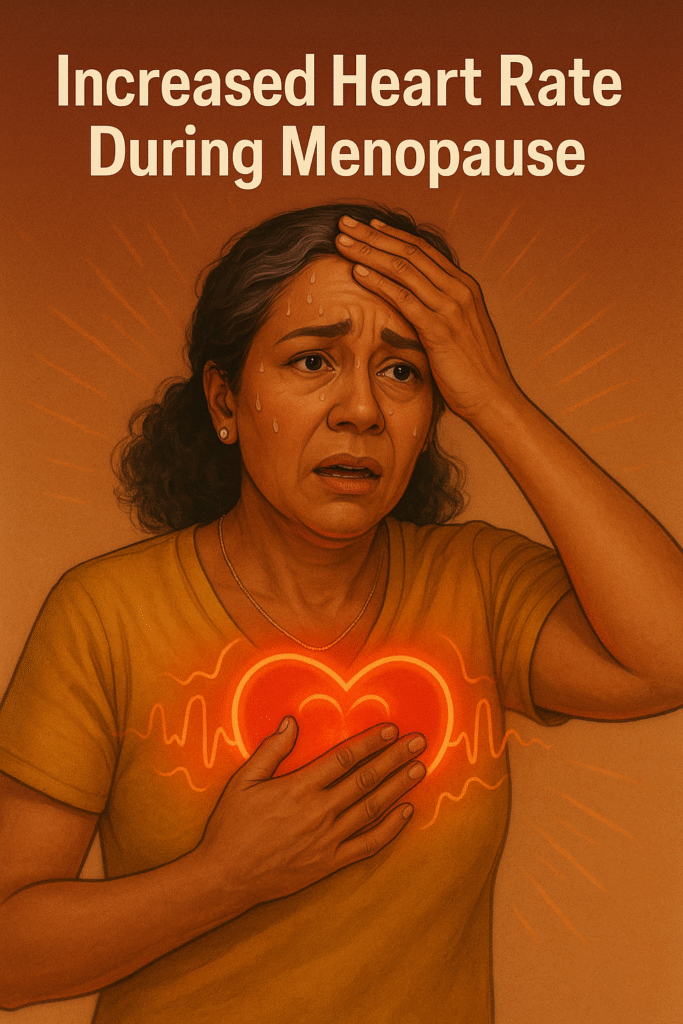
While I was in Switzerland, enjoying the scenery and the calm of the mountains, something unexpected happened. After a few intense hot flashes, I suddenly felt my heart start to race — fast, loud, and out of nowhere. I wasn’t running or panicking. But my chest was pounding like I had sprinted up a hill. If you’ve ever experienced something like this during menopause, you’re not alone — and no, it’s not “just in your head.”
Let’s break down what’s really happening inside your body during these moments.
Why Does Heart Rate Increase During Menopause?
The short answer: Hormonal fluctuations — especially the drop in estrogen — affect your nervous system, blood vessels, and how your body handles stress.
Let’s go deeper:
1. Estrogen and the Autonomic Nervous System
Estrogen doesn’t just affect your reproductive system — it plays a major role in regulating your autonomic nervous system (ANS), which controls:
- Heart rate
- Blood pressure
- Body temperature
- Sweating and flushing
When estrogen levels fall during menopause, your ANS becomes more sensitive and unstable. It may overreact to internal changes, triggering symptoms like:
- Sudden increases in heart rate (palpitations)
- Anxiety or jitteriness
- Lightheadedness or dizziness
This is why hot flashes and heart racing often go hand in hand. They’re coming from the same hormonal disruption.
2. Hot Flashes and the Hypothalamus
Your hypothalamus is the part of your brain that regulates body temperature. Estrogen helps it function smoothly.
During menopause, as estrogen declines, the hypothalamus becomes confused and overreacts to even small changes in temperature. This leads to:
- Sudden feelings of heat
- Flushing
- Sweating
- Followed by a release of stress hormones like adrenaline and norepinephrine
These hormones prepare your body for “fight or flight” — even if there’s no danger. That’s why after a hot flash, you may feel your heart pounding or racing, even if you’re sitting still.
3. Hormonal Imbalance Triggers Adrenal Overload
When your ovaries stop producing estrogen and progesterone, your adrenal glands try to pick up the slack. But they also produce cortisol (the stress hormone), especially if you’re:
- Not sleeping well
- Under emotional or physical stress
- Consuming caffeine or sugar
- Not exercising regularly
This adrenal activity can overstimulate your heart, making it beat faster — or feel “fluttery.”
4. Blood Vessels React to Estrogen Loss
Estrogen also protects your blood vessels, keeping them flexible and able to expand and contract with ease.
When estrogen drops:
- Blood vessels can narrow or stiffen
- This can cause temporary spikes in blood pressure
- Your heart compensates by beating faster
That’s why even mild triggers — like a hot flash, change in temperature, or mild stress — can cause a noticeable jump in heart rate during menopause.
5. Palpitations and Arrhythmias
Menopause can increase the frequency of palpitations — those sudden sensations of skipped beats, fluttering, or pounding in the chest. These are usually benign, but they feel scary.
Some women may also experience benign arrhythmias (irregular rhythms), which should be checked if they happen frequently, are paired with dizziness, or feel severe.
When Should You Be Concerned?
Menopausal heart rate spikes are usually harmless, but you should speak to your doctor if you experience:
- Chest pain or pressure
- Shortness of breath
- Fainting or near-fainting
- Racing heart that lasts longer than 15 minutes
- Dizziness or severe fatigue with palpitations
Important: If you’ve ever had high blood pressure, high cholesterol, or a family history of heart disease, your symptoms should be evaluated sooner rather than later.
How to Calm a Racing Heart During Menopause
Here are some safe, hormone-friendly strategies:
- Deep breathing: Try 4-7-8 breathing (inhale for 4, hold for 7, exhale for 8)
- Cooling down: Use a cold pack or step outside for air
- Avoid caffeine and alcohol during hot flash-prone times
- Exercise daily: It strengthens your heart and balances hormones
- Sleep more: Poor sleep increases cortisol and heart strain
- Hydration: Dehydration makes palpitations worse
Final Thoughts from Menopause Matter
What happened to me in Switzerland wasn’t just a random moment — it was my body reacting to the deep hormonal shifts of menopause. If your heart starts to race, you’re not broken, and you’re not alone.
Estrogen affects everything from your brain to your blood vessels, and when it drops, the effects are real. But you can support your heart — and your peace of mind — by learning what’s happening and taking action.
Always listen to your body. Always ask questions. And remember — your symptoms matter.
Want to track your heart symptoms? Stay tuned for our free Menopause Heart Health Tracker coming soon at menopausematter.org.